
Southeast Asia faces rising environmental, regulatory, and market pressure. Growing investor scrutiny over ESG (Environmental, Social, Governance) metrics, changing consumer expectations, and the urgency of climate change make sustainability an economic necessity.
In ASEAN, disparities in economic development, infrastructure, and digital readiness create both challenges and opportunities. Firms that integrate ESG values, adopt technological innovation, and embed green operational innovation can gain an edge in regional and global markets.
ESG + Technological Innovation – Dual Engines of Sustainability
Research shows that ESG initiatives and technology-driven innovation each boost corporate sustainability. Their combination delivers even stronger outcomes.
- AI and digital tools are being used by global firms (e.g., Amazon, Alibaba) to optimise logistics, reduce waste, and monitor environmental impact in real time.
- ESG is embedded into strategic processes so that decisions around product development, supply chain, and operations consider environmental and social impacts from the start.
- Organizational structures are being adapted (teams, governance, capabilities) to be more flexible and responsive to environmental, regulatory, and social change.
Green Operational Innovation
Green operational innovation refers to reengineering processes, resource uses, and operations to be more resource-efficient, less wasteful, and more aligned with environmental goals. It acts as a moderator; in other words, adding it strengthens the positive relationship between ESG/tech innovation and sustainability outcomes.
Recent studies also suggest that when firms engage in both ESG initiatives and technological innovation, green operational innovation becomes a crucial enabler of sustainable performance and competitiveness. Companies that focus on environmentally friendly products as part of this innovation pathway can accelerate their sustainability impact. At the same time, policymakers play a vital role in supporting these shifts, ensuring environmental standards rise across industries.
ASEAN-relevant examples and ideas:
- Manufacturing firms are installing energy-efficient machinery and leveraging real-time monitoring to reduce energy waste.
- Agro-industrial operations using precision agriculture (sensors, data) to reduce water usage, pesticide overuse, and fertilizer run-off.
- FMCG (fast-moving consumer goods) firms are rethinking packaging, moving to biodegradable materials or refillable systems.
Lessons from Global Industry Leaders
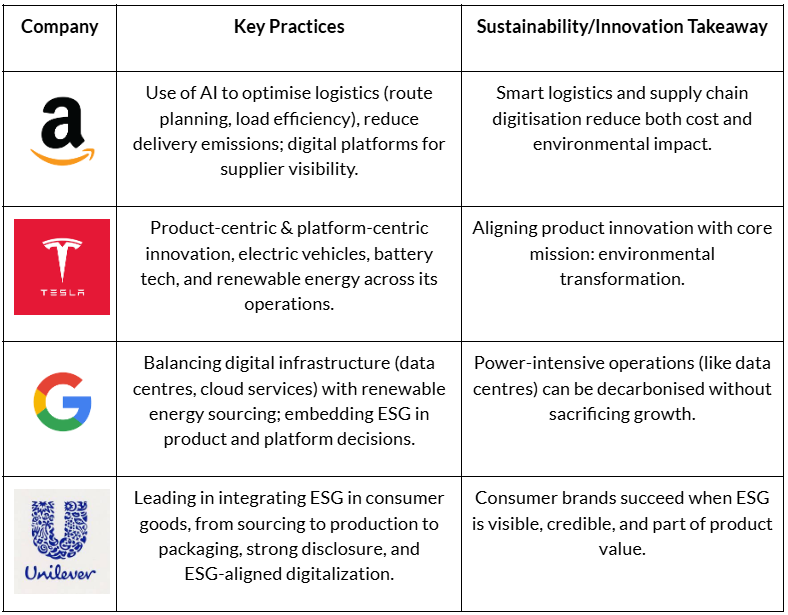
The studies show five leading companies, Amazon, Tesla, Alibaba, Google, Unilever, and find several strategic practices worth emulating:
Strategic Pathways for ASEAN Businesses – Taking Global Lessons Local
How can ASEAN firms adapt these practices to their contexts?
- Leverage AI & Digital Tools for Operational Efficiency
- Use predictive analytics to reduce downtime in manufacturing.
- Smart route planning for logistics to save fuel and time.
- IoT-enabled sensors in agriculture and fisheries for precision resource usage.
- Embed ESG Values from Strategy to Execution
- ESG should influence board decisions and product design.
- Build ESG KPIs into operational dashboards (e.g., emissions per unit, waste per production run).
- Transparent ESG reporting to stakeholders (investors, customers, regulators).
- Adapt Organizational Structure and Capabilities
- Cross-functional teams combining sustainability, operations, and tech.
- Agile or dynamic capability building, so firms can shift quickly as regulatory or climate landscapes shift.
- Training staff in digital fluency + sustainability literacy.
- Green Operation Innovation as Core, Not Add-on
- Re-engineer core production processes for resource efficiency.
- Embed circular economy practices (recycling, reuse) in product life cycles.
- Use renewables and clean energy sources for power-heavy operations.
- Consumer & Stakeholder Engagement
- Develop product lines and services that clearly communicate sustainability features.
- Engage suppliers and partners in ESG commitments.
- Use digital platforms to gather feedback, build trust, and co-create sustainable solutions.
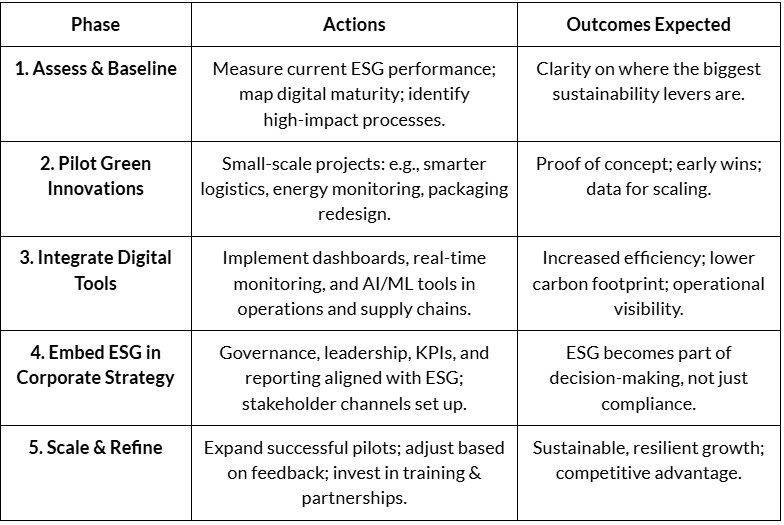
Practical Roadmap from Pilot to Scale
Here is a practical phased roadmap for ASEAN firms:
Additional Examples to Inspire
- Circular Computing: A company that remanufactures laptops, using a 360-point quality check to ensure devices perform like new while being carbon-neutral.
- WestRock: Packaging company using QR codes, RFID, and digital tech to encourage recycling and build traceability.
- L’Oréal: Heavy investment in sustainable innovation accelerators, circular packaging, and supply chain decarbonisation.
These show different sectors, tech hardware, packaging, and cosmetics, applying similar strategic pathways.
ASEAN industries stand at a crossroads. The path forward is clear: combining ESG, digital transformation, and green operational innovation is strategic.
By learning from global leaders, adapting to local conditions, and moving from pilot to scale with an intentional strategy, ASEAN firms can build resilience, competitiveness, and long-term sustainable growth.
Sources: https://www.nature.com/articles/s41599-025-04389-8
https://www.sciencedirect.com/science/article/pii/S2590291125006345