
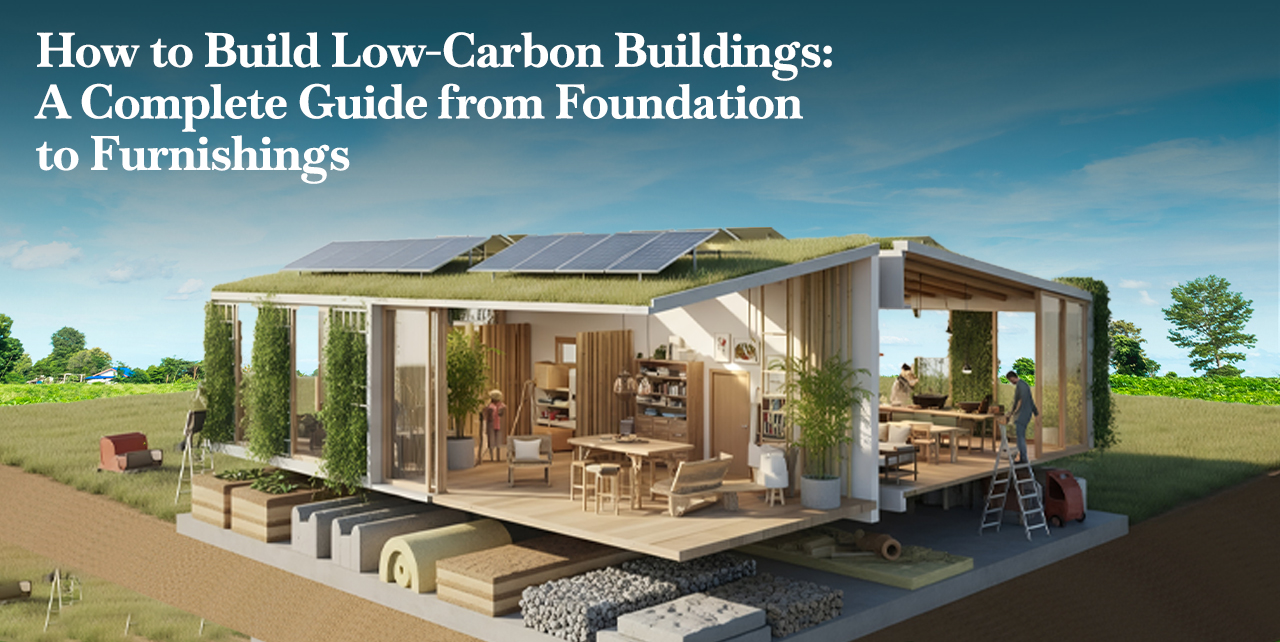
The construction sector accounts for roughly 40% of global carbon emissions, driven by both embodied (materials + construction) and operational energy. Here’s how you can drastically reduce emissions throughout the building lifecycle from foundational materials to interior choices.
Use Low-Carbon and Sustainable Materials
Selecting eco-friendly materials is foundational to reducing a building’s carbon footprint. Sustainable materials not only lower embodied carbon but also often enhance indoor air quality and occupant health. Options such as recycled aluminium, wood fiber insulation, sheep wool, and innovative concrete alternatives like ashcrete can replace conventional high-carbon materials. However, simply choosing sustainable materials isn’t enough, a well-integrated design that complements these choices is critical.
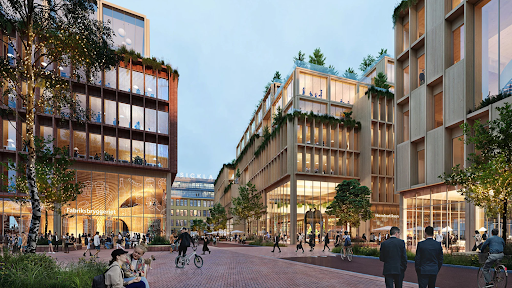
Stockholm’s Wood City is using mass timber to cut emissions by 40% versus traditional building methods.
Embrace Passive House Design for Ultra-Low Energy Consumption
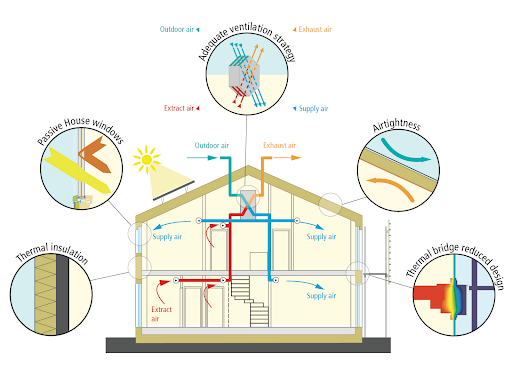
Passive House design principles focus on airtight building envelopes, superior insulation, and minimal thermal bridging, reducing heating and cooling energy demand by up to 90%. This standard has been widely adopted across Europe and is gaining momentum in Asia. London’s Canary Wharf development, soon to be Europe’s largest Passive House project, demonstrates how urban-scale low-carbon buildings are achievable. By carefully orienting buildings, using triple-glazed windows, and integrating mechanical ventilation with heat recovery, Passive House buildings maintain stable indoor temperatures year-round with minimal energy input.
Add Renewable Energy & Smart Systems
Incorporate solar PV, heat pumps, or biofuel microgrids to eliminate operational emissions. CannonDesign’s zero-energy office in Denver exemplifies this approach. Smart building controls, like AI-based HVAC and lighting optimization, shave operational energy and improve occupant comfort.
Energy efficiency remains a cornerstone of low-carbon building design. Simple measures such as LED lighting, double or triple glazing, and high-efficiency appliances significantly reduce operational emissions. Insulating lofts and walls prevents heat loss, decreasing heating demand.
The UK’s Energy Performance Certificate (EPC) system incentivizes such efficiency improvements, encouraging developers to meet strict energy use and carbon emission criteria before selling or renting properties.
Implement Effective Waste Management and Circular Practices
Construction waste is a major environmental issue, with discarded materials including insulation scraps, wood offcuts, glass, and metals. Planning for waste management before construction begins, such as through frameworks like BREEAM. Which enables developers to minimize waste, recycle onsite materials, and ensure responsible disposal.
Circular design strategies, which emphasize reuse and deconstruction, help close resource loops. For example, modular buildings can be dismantled and reassembled elsewhere, reducing demand for virgin materials and landfill use.
Use Low-Carbon Concrete Mixes
Concrete production accounts for approximately 8% of global CO₂ emissions. Incorporating supplementary cementitious materials like fly ash, slag, and calcined clays into concrete mixes can significantly reduce carbon intensity without sacrificing performance. Consulting with structural engineers and sustainability experts ensures the right mix designs are selected based on availability and structural requirements, achieving durable, low-carbon concrete.
Minimize Finishing Materials
Finishing materials such as vinyl flooring, carpets, and false ceilings contribute additional embodied carbon. Using structural materials as finishes like polished concrete floors or exposed ceilings, can cut emissions and reduce maintenance costs. This approach also creates an aesthetic of honesty and simplicity, often preferred in modern sustainable architecture.
Incorporate Water Preservation and Heat Recovery Technologies
Water-saving technologies, such as tap aerators and sensors, reduce unnecessary consumption. Additionally, Waste Water Heat Recovery (WWHR) systems reclaim heat from shower water to pre-warm cold mains water, reducing energy use for heating. These systems lower operational carbon emissions and contribute to building resilience amid water scarcity and rising energy costs.
Building low-carbon buildings is a complex but rewarding challenge. Success lies in a holistic approach from choosing sustainable materials and efficient design standards to smart energy and water management and circular construction practices. Whether you’re constructing new developments or retrofitting existing stock, prioritizing low carbon strategies will future-proof your projects against regulatory, environmental, and market shifts.
Join us for an intensive, hands-on ESG for Construction Workshop designed to help professionals in the built environment move from theory to action. Taking place,
- On September 9, 2025
- From 9:00 AM to 5:00 PM
- At Kuching, Sarawak.
This one-day session dives deep into environmental, social, and governance (ESG) practices tailored for the construction sector. You’ll explore five practical modules covering low-carbon design, social impact integration, governance structures, and green-building certifications like LEED and BREEAM.
Get registered now : Integrating ESG Practices in Construction & Development – Fuller Academy