
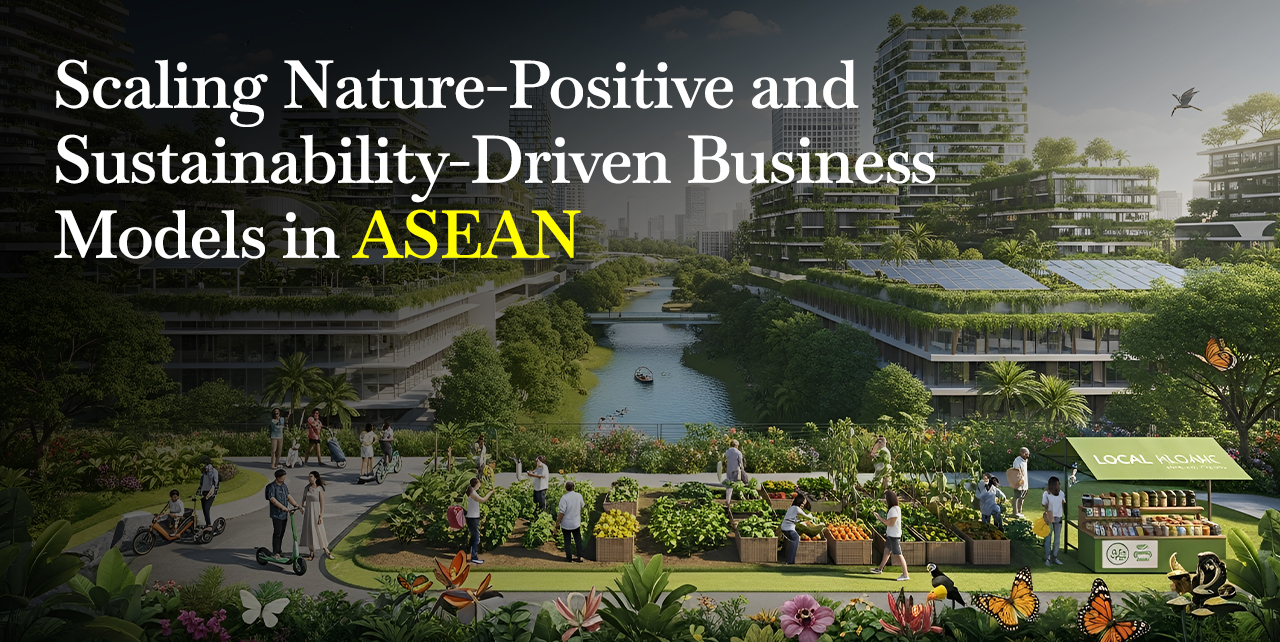
Southeast Asia is at a critical crossroads. With rapid urbanisation, climate exposure, and biodiversity loss, businesses in the region face mounting environmental and societal risks. At the same time, these challenges create unprecedented opportunities for companies that embed sustainability into their core strategies. Nature-positive and sustainability-driven business models are essential for long-term resilience and growth.
Why ASEAN Businesses Must Act Now
ASEAN economies are highly exposed to climate and nature-related risks: floods, deforestation, water scarcity, and biodiversity loss threaten supply chains, operations, and reputations. Companies that fail to address these challenges may face regulatory penalties, investor scrutiny, and market disadvantages.
Conversely, businesses that adopt sustainability-focused strategies can:
- Unlock new revenue streams through eco-friendly products and services.
- Reduce costs with resource efficiency and circular practices.
- Strengthen brand trust among increasingly conscious consumers and investors.
- Access nature-linked finance, including green bonds and sustainability-linked loans.
Key Nature-Positive Strategies for ASEAN
Nature-positive approaches go beyond compliance; they integrate ecosystem protection and restoration into business operations. Key strategies include:
1. Protecting and Restoring Natural Assets
Companies can safeguard forests, wetlands, and coastal ecosystems to mitigate risks like flooding and erosion. This protects local communities and enhances long-term operational stability.
2. Nature-Linked Investments
Instruments like sustainability-linked loans or green bonds tied to biodiversity outcomes incentivize companies to meet measurable environmental goals while accessing capital.
3. Supply Chain Stewardship
Embedding sustainability across supply chains, like sourcing responsibly, reducing deforestation, or promoting regenerative agriculture, ensures resilience and compliance with regional ESG standards.
Sustainability-Driven Business Models in Practice
Beyond nature-focused strategies, companies can adopt broader sustainability-driven models to align profitability with positive impact. Examples include:
1. Circular Economy Models
Reusing, recycling, and designing products for longevity reduces environmental footprint while lowering costs. ASEAN manufacturers can particularly benefit by reducing waste and optimising raw materials.
2. Product-as-a-Service Models
Offering access rather than ownership, like shared mobility or equipment leasing, reduces resource use and supports sustainable consumption patterns.
3. Shared Value Models
Aligning business success with societal benefits can open new markets and foster innovation. For instance, companies supporting renewable energy adoption in rural areas can drive growth while improving community well-being.
4. Sustainable Innovation
Embedding ESG considerations into R&D and product design ensures that new offerings contribute to climate resilience, resource efficiency, and biodiversity protection.
Measuring Impact and Tracking Progress
Implementation is incomplete without measurement. ASEAN businesses should:
- Adopt standardized ESG metrics to track environmental and social performance.
- Conduct scenario analysis to anticipate climate-related risks.
- Use transparent reporting to communicate progress to investors, regulators, and customers.
This structured approach enhances credibility and can unlock sustainability-linked financing and partnerships.
Scaling Up Across ASEAN
The potential for impact in ASEAN is immense. By integrating nature-positive practices and sustainability-driven business models, companies can:
- Build resilient supply chains amid climate disruptions.
- Reduce regulatory and financial risks.
- Tap into growing markets for sustainable products.
- Contribute to regional climate and biodiversity goals while driving profit.
Governments, investors, and business leaders must collaborate to scale these models, providing guidance, incentives, and capacity-building initiatives to encourage adoption.
Source: https://www.wri.org/research/guidebook-businesses-nature and https://acr-journal.com/article/download/pdf/1392/