
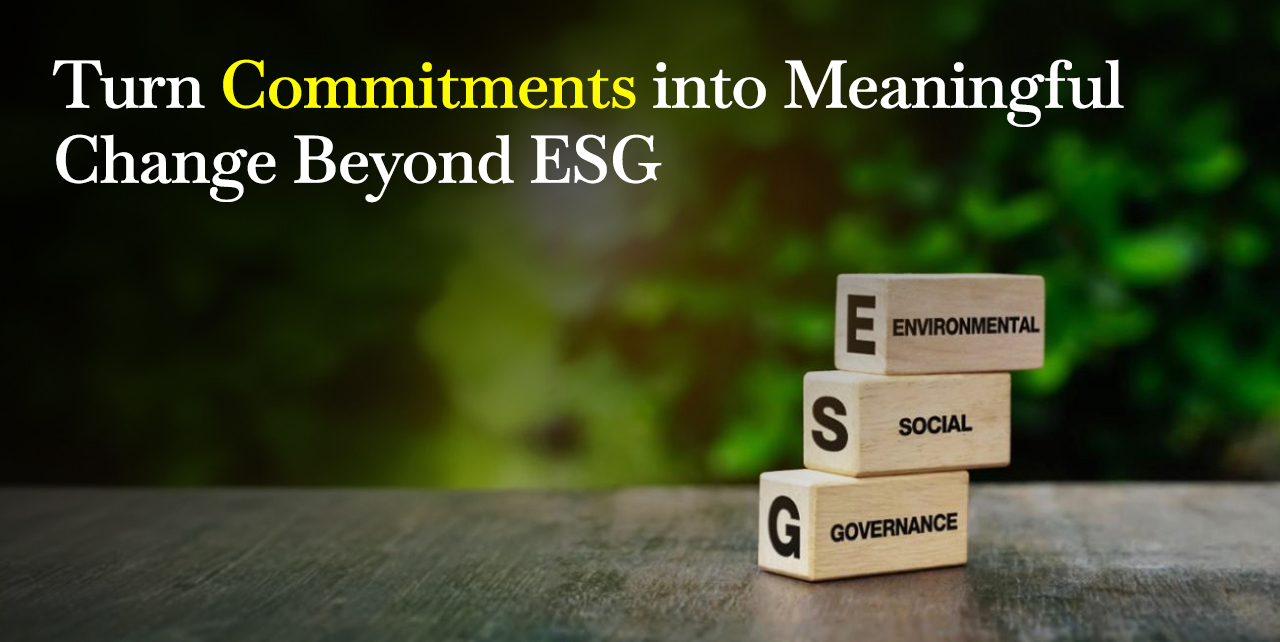
For over a decade, ESG has guided how companies integrate environmental, social, and governance concerns into business strategy. But as sustainability expectations rise, a clear pattern has emerged: ESG alone is no longer enough.
Disclosures are increasing, yet impact remains uncertain. Investors and regulators are asking the same question: What is actually changing?
It’s time to move beyond ESG as a reporting framework and toward measurable, material, and meaningful transformation in the next chapter of sustainable business leadership.
The ESG Plateau
When ESG first entered the corporate agenda, it was a breakthrough. It gave companies language to discuss ethics, responsibility, and environmental impact in financial terms. But over time, the term has become fragmented, inconsistent, and often symbolic.
- Different interpretations have led to confusing metrics and mismatched priorities.
- Disclosure fatigue has replaced real accountability.
- Stakeholders from investors to communities are questioning whether ESG reports reflect genuine impact or mere compliance.
This fatigue marks a turning point. Sustainability leaders now recognise that the next evolution isn’t about redefining ESG, it’s about refocusing it.
Tracking What Matters
Progress demands precision. Moving beyond ESG starts with measurable outcomes.
Companies must build data-driven sustainability systems that quantify results instead of intentions:
- Real carbon reductions, not offset pledges.
- Transparent supply chain metrics, not general commitments.
- Evidence-based reporting that links sustainability efforts to business value.
When impact becomes measurable, it also becomes manageable, and this is where transformation begins.
Focusing on What Truly Impacts Value
Not every issue is equally important. The new sustainability lens prioritises material topics, those that directly influence a company’s long-term financial and societal value.
For instance:
- A construction firm’s material issue may be resource efficiency.
- A bank’s priority could be climate risk in its loan portfolio.
- A technology company’s focus might be on data ethics and digital inclusivity.
By aligning sustainability with core business risks and opportunities, leaders can create strategies that are both responsible and resilient.
Embedding Purpose into Performance
Beyond metrics and frameworks lies the hardest question: What difference are we making?
Meaningful change requires purpose-led transformation, where success is defined by profit and measurable benefits to people and the planet. This involves:
- Designing business models that generate positive environmental and social outcomes.
- Empowering teams to innovate for sustainability.
- Engaging communities as long-term partners, not external stakeholders.
In this new model, leadership is not about compliance; it’s about conviction.
Governance as the Engine of Change
Boards and executive teams play a defining role in turning sustainability into a system. Strong governance ensures that commitments translate into consistent results.
This means integrating sustainability into:
- Executive performance metrics.
- Capital allocation decisions.
- Transparent reporting that links ESG goals to business outcomes.
When governance aligns purpose with performance, sustainability stops being a side initiative and becomes the foundation of business success.
The Shift From Reporting to Results
The path forward is clear. The next phase is about making sustainability measurable, material, and meaningful; a shift from what companies achieve.
To lead in this new era, CEOs and boards must:
- Build measurable frameworks that track actual impact.
- Focus on material topics that drive long-term resilience.
- Embed purpose into decision-making and governance.
The goal is not better reports; better results.
Source: https://www.mckinsey.com/mgi/our-research/beyond-esg-from-checklists-to-capabilities