
Singapore, a city-state with limited natural resources and space, has long been a model of urban innovation and strategic planning. Faced with challenges such as scarce land, dependence on imports for water and energy, and a high population density, the nation has had to adopt forward-thinking solutions to ensure sustainability and resilience.
In February 2021, the government unveiled the Singapore Green Plan 2030, a comprehensive roadmap designed to guide the nation toward a sustainable future over the next decade. The plan sets ambitious targets for environmental protection and positions Singapore as a global leader in sustainable urban development. Key goals include reducing carbon emissions, enhancing green infrastructure, promoting clean energy adoption, and engaging citizens and businesses in eco-conscious practices. By achieving these objectives, Singapore aims to pave the way toward net-zero emissions by 2050, ensuring long-term economic growth and environmental stability.
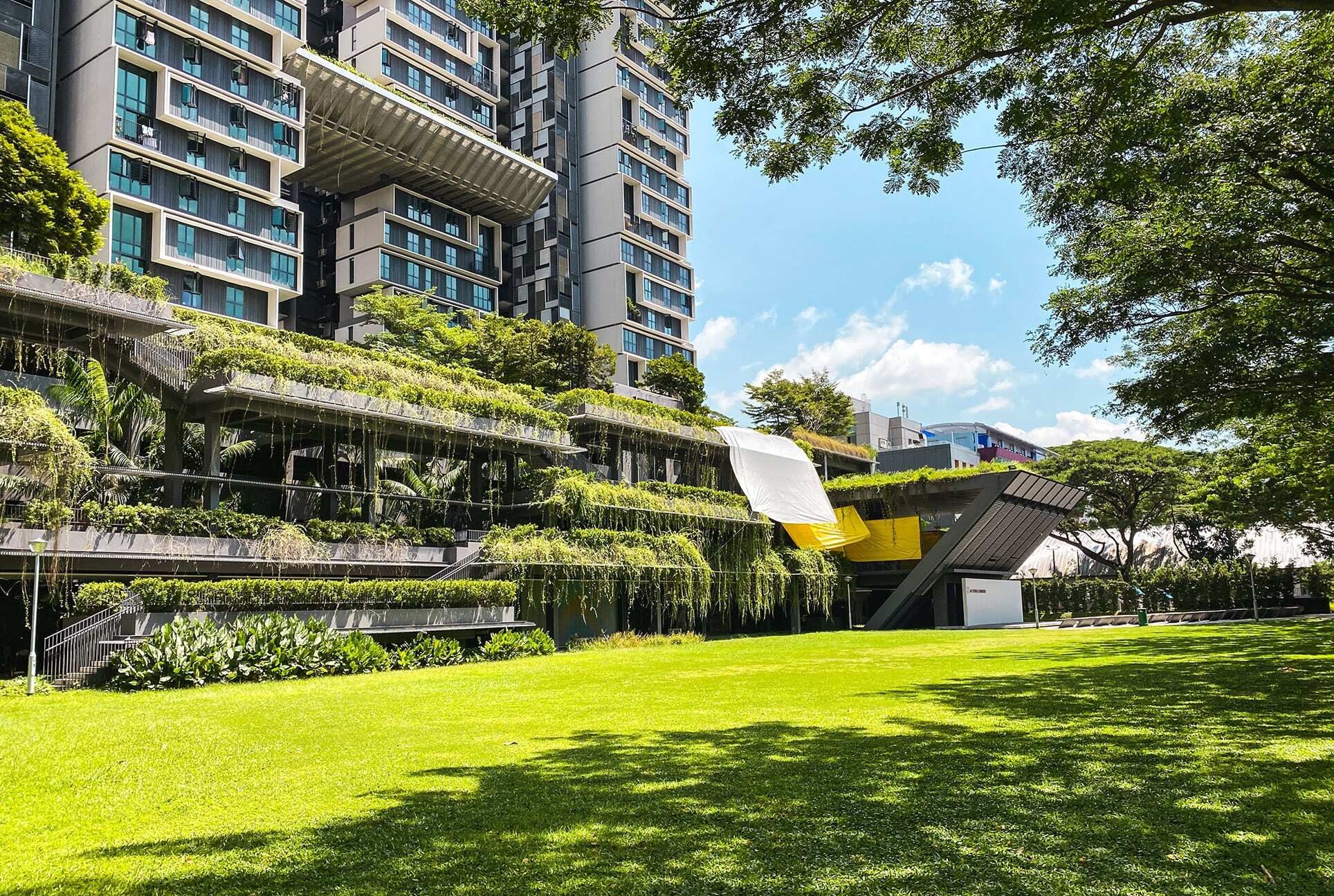
Image: SkyTerrace at Dawson, Singapore.
What Is the Singapore Green Plan 2030?
The Singapore Green Plan 2030 is a whole-of-nation movement to integrate sustainability into every aspect of urban life. The plan aligns with international frameworks such as the United Nations Sustainable Development Goals and the Paris Agreement, reflecting Singapore’s commitment to global climate action.
The plan is implemented across multiple government agencies, private sectors, and community organisations, ensuring a cohesive and inclusive approach. It is structured around five key pillars, each addressing a critical area of sustainability:
- City in Nature – Enhancing biodiversity, creating green corridors, and ensuring residents live within easy access to parks and natural spaces. This pillar acknowledges the link between urban well-being and access to nature.
- Sustainable Living – Encouraging eco-friendly lifestyles, reducing waste, and promoting responsible consumption. By embedding sustainability into daily life, Singapore seeks to create a culture of environmental stewardship.
- Energy Reset – Transitioning to low-carbon energy sources such as solar, promoting energy efficiency, and preparing the nation for a clean energy future. This addresses the country’s dependence on imported fossil fuels and rising energy demands.
- Green Economy – Fostering green innovation, developing sustainable industries, and creating jobs that contribute to a low-carbon economy. This ensures economic growth remains aligned with environmental responsibility.
- Resilient Future – Building infrastructure and urban systems that can withstand climate change impacts, like extreme weather and rising sea levels. This pillar ensures long-term resilience for both people and businesses.
Each pillar is underpinned by transparency, innovation, and citizen engagement, demonstrating that achieving sustainability is a shared responsibility requiring collaboration across all sectors of society.
Key Targets and Achievements
1. City in Nature
Singapore recognises that green spaces are vital for biodiversity and for residents’ health and quality of life. Under the Green Plan 2030:
- Tree Planting: The nation aims to plant 1 million additional trees by 2030, nearly doubling its current annual planting rate. This initiative helps improve air quality, reduce urban heat, and enhance carbon absorption.
- Accessible Parks: Every household will be within a 10-minute walk of a park or green space by 2030, ensuring equitable access to nature and promoting outdoor activity.
These measures reflect Singapore’s vision of a “City in Nature”, where urban development and greenery coexist seamlessly.
2. Sustainable Living
Embedding sustainability into daily life is a core objective. Singapore is encouraging citizens to adopt environmentally responsible behaviours:
- Waste Reduction: The target is to reduce waste sent to landfills by 30% over the next decade. This includes enhanced recycling, food waste reduction programmes, and extended producer responsibility initiatives.
- Carbon-Neutral Schools: By 2030, at least 20% of schools will achieve carbon neutrality, integrating renewable energy, efficient lighting, and sustainable building designs. These efforts nurture environmental awareness from a young age.
Sustainable living initiatives illustrate that the plan is about infrastructure and shaping citizen behaviour, which is crucial for long-term impact.
3. Energy Reset
Singapore’s limited natural resources make energy efficiency and clean energy adoption essential:
- Solar Energy Deployment: The country aims to install 2 gigawatt-peak (GWp) of solar energy by 2030, enough to power approximately 350,000 households. This includes rooftop panels and large-scale floating solar farms.
- Electric Vehicle Infrastructure: With plans to roll out 60,000 EV charging points by 2030, Singapore is accelerating the transition to low-emission transport.
The Energy Reset pillar ensures that Singapore reduces reliance on fossil fuels, mitigates greenhouse gas emissions, and leads in clean urban mobility.
4. Green Economy
The Green Plan also integrates sustainability with economic growth:
- Green Jobs & Industries: Policies encourage the creation of jobs in renewable energy, sustainable construction, and green technology sectors, ensuring economic resilience in a low-carbon future.
- Sustainable Tourism: The tourism sector is being transformed to adopt eco-friendly practices, focusing on lowering emissions at tourist sites and encouraging sustainable travel habits.
By aligning economic development with sustainability, Singapore demonstrates that growth and environmental stewardship can go hand in hand.
5. Resilient Future
Singapore’s geographic vulnerabilities, low-lying coastal areas, and high rainfall make climate resilience essential:
- Infrastructure Adaptation: Investments include advanced drainage systems, flood barriers, and climate-resilient urban planning to safeguard communities and businesses.
- Climate Preparedness: The government promotes research and innovation in climate modeling, disaster response, and risk mitigation, ensuring Singapore is prepared for future climate challenges.
This pillar emphasizes that resilience is proactive, not reactive, integrating climate risks into national planning.
Challenges and Opportunities
Despite its ambitious goals, Singapore faces inherent challenges:
- Limited Land: Urban space is scarce, requiring innovative solutions like vertical gardens, rooftop solar, and multi-functional green spaces.
- High Energy Demand: With dense population and economic activity, transitioning to low-carbon energy requires careful planning and innovation.
- Resource Dependence: Singapore relies heavily on imported water and energy, making self-sufficiency initiatives like NEWater and solar vital.
However, these constraints also spark innovation, positioning Singapore as a testbed for urban sustainability solutions. Emerging opportunities include:
- Vertical Farming and Urban Agriculture to optimise limited space.
- Green Technology & Smart City Solutions to improve efficiency and reduce emissions.
- Public-Private Partnerships that accelerate the adoption of sustainable practices across industries.
The Singapore Green Plan 2030 is a bold and integrated roadmap that demonstrates the nation’s commitment to sustainability, resilience, and innovation. By combining green infrastructure, renewable energy, sustainable living, and climate-ready planning, Singapore is creating a model for cities worldwide.
As the city-state works toward its 2050 net-zero emissions target, the Green Plan proves that strategic planning, citizen engagement, and innovation can transform a small nation into a global sustainability leader.