
11 Aug Growth Drivers and Hidden Barriers of Green Buildings in Singapore
Once viewed as costly and optional, green buildings in Singapore has transformed into a national mandate and a model for the region. But this success didn’t happen overnight. Singapore’s green building journey began with scepticism, a lack of awareness, and limited material options. Today, it is driven by bold policy, innovation, and climate urgency.
This blog unpacks how the city-state moved from resistance to resilience, highlighting the barriers that existed then and the drivers shaping its green building future.
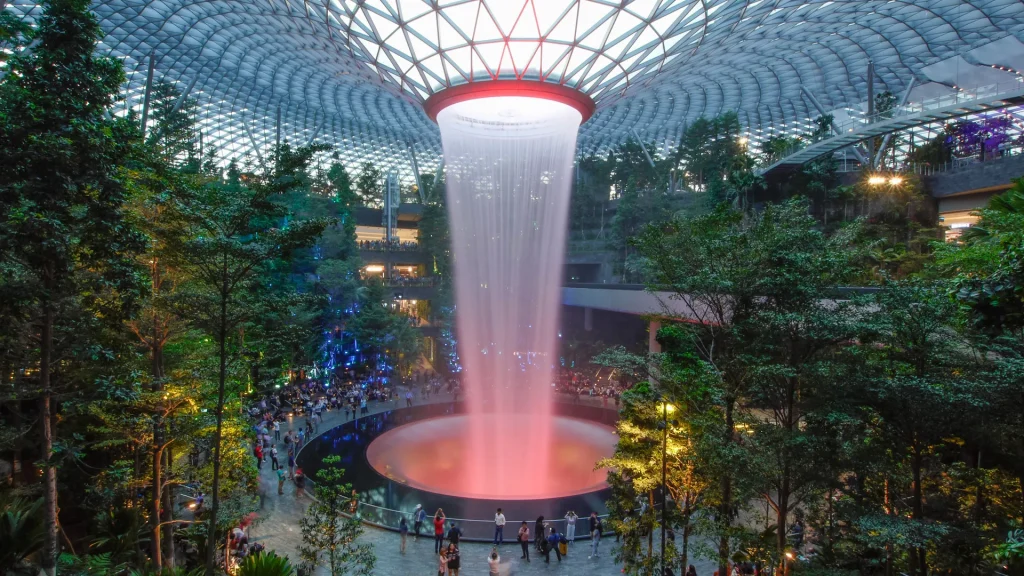
Image: Jewel Changi Airport Singapore
Why Green Buildings Struggled in Singapore
Before the mid-2000s, sustainability in construction was not a priority in Singapore’s built environment. Multiple roadblocks stood in the way of adoption.
1. Low Public Awareness and Industry Buy-in
Sustainability was not yet mainstream. Developers focused primarily on cost and speed, and few consumers understood the long-term environmental or financial benefits of green buildings.
2. Perceived High Costs
There was a strong perception that green building features, such as natural ventilation systems or energy-efficient facades, added unnecessary expense without sufficient return on investment.
3. Lack of Certified Materials and Technologies
In the early days, many environmentally friendly construction materials were not available locally. Importing such materials inflated project costs and timelines.
4. No National Benchmark or Certification
Before 2005, Singapore lacked a formal framework to define or rate building sustainability. Without a benchmark, developers had no consistent way to plan, measure, or market their green credentials.
5. Shortage of Skilled Professionals
Architects, engineers, and contractors were not trained in green construction techniques. This skill gap slowed progress in both design and execution.
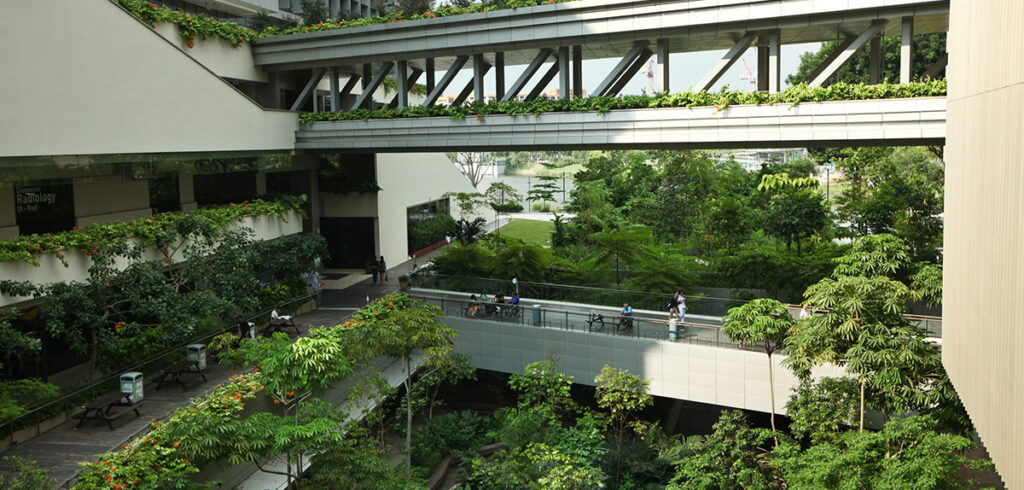
Image: Khoo Teck Puat Hospital, Singapore
The Turning Point: What Drove Singapore Forward
Singapore’s shift toward sustainability began with strategic interventions from the government and supporting agencies.
1. Introduction of the BCA Green Mark Scheme (2005)
This was a game-changer. The Building and Construction Authority (BCA) introduced Green Mark to provide a national benchmark for green buildings. It created clear metrics for energy efficiency, water savings, environmental protection, and indoor environmental quality.
2. Government Incentives and Pilot Projects
Programmes such as the Green Mark Incentive Scheme (GMIS) offered funding for design and innovation. The government also piloted green buildings in public housing (e.g., HDB developments), commercial zones, and schools, setting early examples.
3. Rising Energy Costs and Urban Heat Effects
As urban density increased, so did demand for cooling. This drove the need for energy-efficient building strategies, pushing developers to rethink design from an operational cost standpoint.
Today’s Barriers: What Still Holds Back Progress
Despite world-leading policy frameworks, Singapore still faces challenges in achieving its net-zero building goals.
1. Complex Retrofitting of Existing Buildings
Older buildings, especially those developed before the Green Mark era, require major renovations to meet modern green standards. This process is often expensive, disruptive, and technically complex.
2. Upfront Costs for Smaller Developers
Although government grants exist, small- to mid-sized developers may still view green building upgrades as financially burdensome, especially when profit margins are tight.
3. Material Embodied Carbon and Supply Chains
Many green materials used today are imported, carrying high embodied carbon. Local alternatives are growing but still lag in scalability and certification.
4. Uneven Consumer Demand
Not all buyers or tenants prioritise green certification when choosing properties, which can reduce market pressure on developers to go green.
Today’s Drivers: What’s Fueling the Green Building Movement Now
Despite these hurdles, green building in Singapore continues to expand, supported by a mature ecosystem of policy, finance, and innovation.
1. Mandatory Sustainability Targets
Singapore aims to green 80% of its buildings by 2030, with a focus on energy intensity reductions and smart building practices. These targets are driving compliance across the public and private sectors.
2. Green Mark 2021 and Super Low Energy (SLE) Programs
The enhanced Green Mark 2021 standard integrates climate responsiveness, digital readiness, and health & wellbeing into building assessments. Meanwhile, the SLE program encourages buildings to go beyond standard efficiency benchmarks.
3. ESG Reporting and Green Finance
Property developers and REITs are under increasing pressure to report sustainability metrics. Singapore’s green finance taxonomy also enables access to sustainable loans and bonds linked to building performance.
4. Innovation and Technology
Smart building systems, predictive maintenance, and climate-responsive design are now mainstream in major developments. These innovations improve efficiency and reduce operational costs.

Image: Gardens By the Bay, Singapore
What Singapore Teaches the Region
Singapore’s green building journey demonstrates that systematic investment in policy, awareness, and technology can turn a hesitant market into a global leader. Its progress is proof that barriers can be overcome, and that sustainable urbanisation is not only necessary but achievable. As cities across ASEAN seek climate resilience, the lessons from green building in Singapore will remain highly relevant.
Sorry, the comment form is closed at this time.